
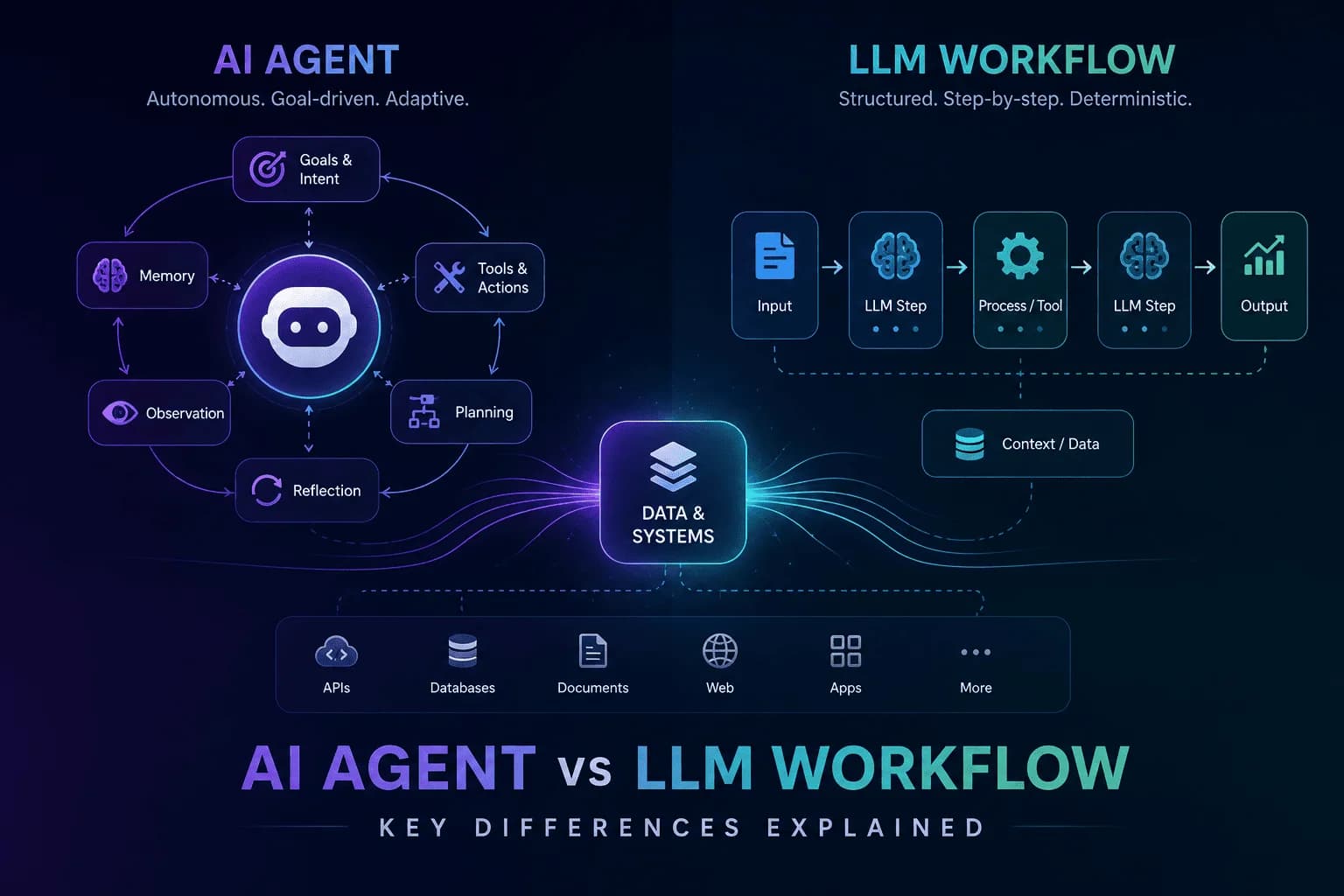
AI Agent vs LLM Workflow: Understanding the Key Differences
When you're staring at a pile of customer queries that need immediate attention, the difference between an AI agent and an LLM workflow can feel like a chasm. You're caught in a whirlwind of tasks, and the tools at your disposal seem to blur together. Do you automate responses using a language model or deploy an AI agent that can handle complex tasks autonomously? Making the wrong choice here could mean wasted resources, lost opportunities, or frustrated users.
This blog post will clarify the differences between AI agents and LLM workflows, exploring their functionalities, use cases, and how they can complement each other. Understanding these distinctions is crucial for optimizing your automation strategy and leveraging the right tools for your specific needs.
Defining AI Agents and LLM Workflows
What is an AI Agent?
An AI agent is a software entity designed to autonomously perform tasks, learn from interactions, and adapt to changing environments. These agents can execute pre-defined actions based on the data they receive and often include capabilities such as natural language processing (NLP), decision-making, and learning algorithms. In practical terms, an AI agent can manage customer interactions, automate workflows, or even control other software tools.
Understanding LLM Workflows
On the other hand, LLM workflows leverage Large Language Models (LLMs) to process and generate human-like text based on input prompts. These models excel in understanding context, producing coherent text, and handling complex queries. However, they don't inherently manage tasks autonomously; instead, they require additional structures to guide their output into actionable workflows. For example, you might use an LLM to generate responses based on user queries, but you still need to integrate that output into a system that sends the responses to customers.
Key Distinctions: AI Agent vs LLM Workflow
Autonomy vs Guidance
A primary difference between AI agents and LLM workflows is autonomy. AI agents can operate independently, making decisions and taking actions without needing constant input from users, which is particularly valuable in dynamic environments. In contrast, LLM workflows require guidance; they rely on prompts and context to generate responses, which then must be directed into a system for action.
Complexity of Tasks
Another distinction lies in the complexity of tasks they can handle. AI agents are typically capable of managing multi-step processes, integrating with various systems, and handling diverse inputs seamlessly. For example, an AI agent could process a customer request, access databases, and generate a tailored response, all in one go. LLM workflows, while powerful in generating text, may struggle with the intricacies of complex tasks, often needing additional programming or human supervision to ensure a coherent outcome.
Use Cases for AI Agents and LLM Workflows
Scenarios for AI Agents
Imagine a customer support system where an AI agent can autonomously respond to inquiries, analyze customer sentiment, and escalate issues when necessary. This agent can access historical data, learn from interactions, and adapt its responses over time, ultimately improving the customer experience.
Scenarios for LLM Workflows
Conversely, consider a content generation tool that uses an LLM workflow to draft articles or marketing copy. Here, the model can deliver high-quality text based on specific prompts but requires a human to edit and publish the content. The workflow structure helps ensure that the generated text aligns with the organization’s voice and messaging.
The Synergy Between AI Agents and LLM Workflows
While AI agents and LLM workflows serve different purposes, they can be highly effective when used together. For instance, you could employ an AI agent to manage the initial customer inquiries and use an LLM workflow to generate personalized responses based on the context provided by the agent. This hybrid approach maximizes the strengths of both technologies, leading to enhanced efficiency and better customer experiences.
Here’s a Tool That Solves Part of This
In navigating the differences between AI agents and LLM workflows, finding the right tools is crucial. The featured agent integrates seamlessly with existing systems, allowing you to automate complex tasks while leveraging the power of LLMs. With capabilities like real-time data analysis, adaptive learning, and multi-channel integration, this agent can manage customer interactions effectively and efficiently.
By deploying the featured agent, you can streamline workflows that otherwise would involve manual oversight and intervention. Imagine configuring the agent to handle customer queries automatically while it pulls in data from an LLM to generate nuanced, context-aware responses. This combination not only saves time but also enhances the quality of interactions, ensuring your customers feel valued and understood.
Conclusion
Understanding the differences between AI agents and LLM workflows is essential for optimizing your operations and enhancing automation strategies. While AI agents excel in autonomy and task complexity, LLM workflows shine in generating human-like text. By leveraging both, you can create a more effective, efficient system that meets your unique needs. Consider experimenting with the featured agent to see how it can enhance your current capabilities without overhauling your entire setup.
Related articles
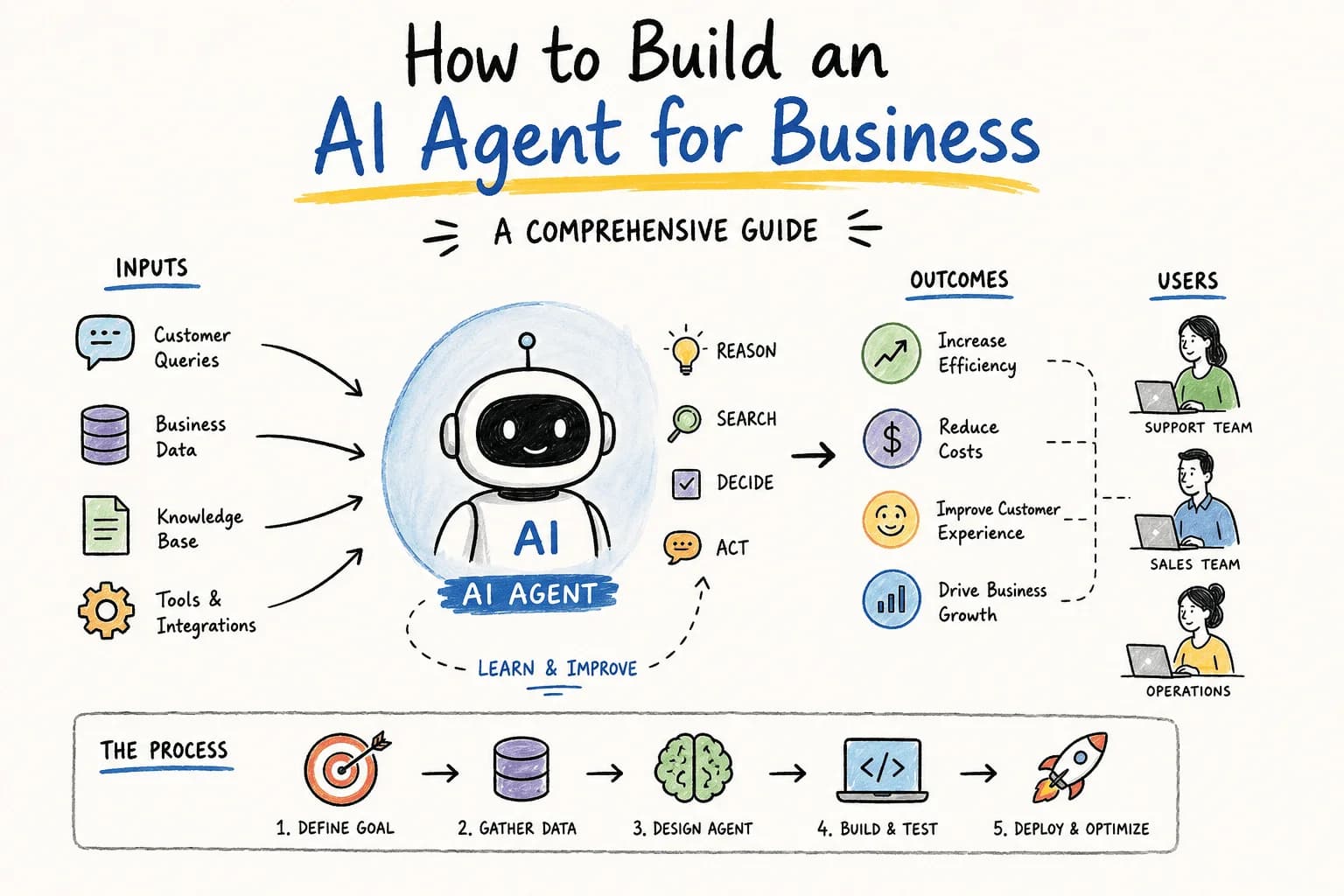
How Do I Build an AI Agent for My Business?
Wondering how to build an AI agent for your business? This guide walks you through essential steps, tools, and considerations to create an effective AI solution.
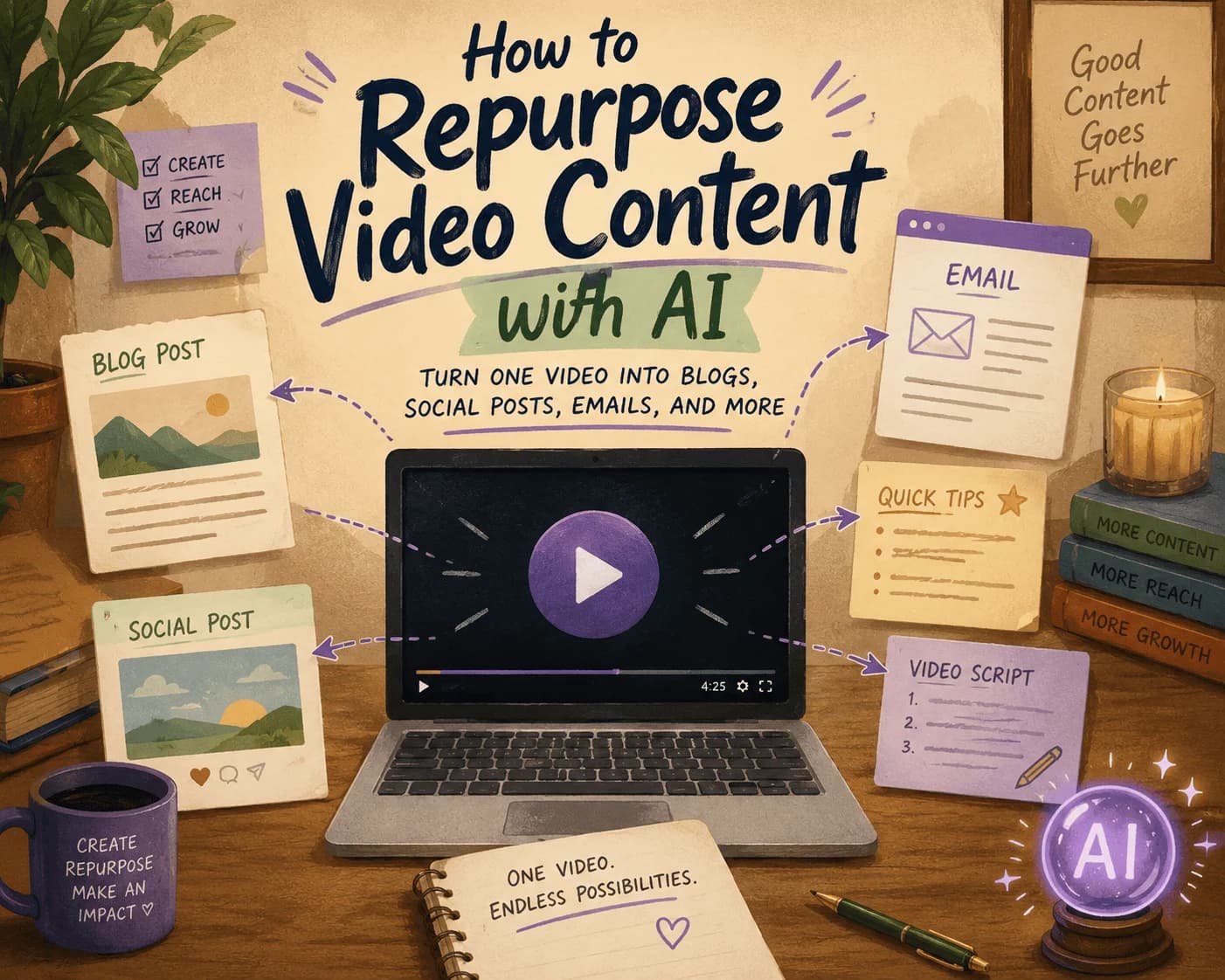
How to Repurpose Video Content with AI: Turn One Video into Blogs, Social Posts, Emails, and More
Discover how to efficiently repurpose your video content into various formats using AI, maximizing your reach across platforms.
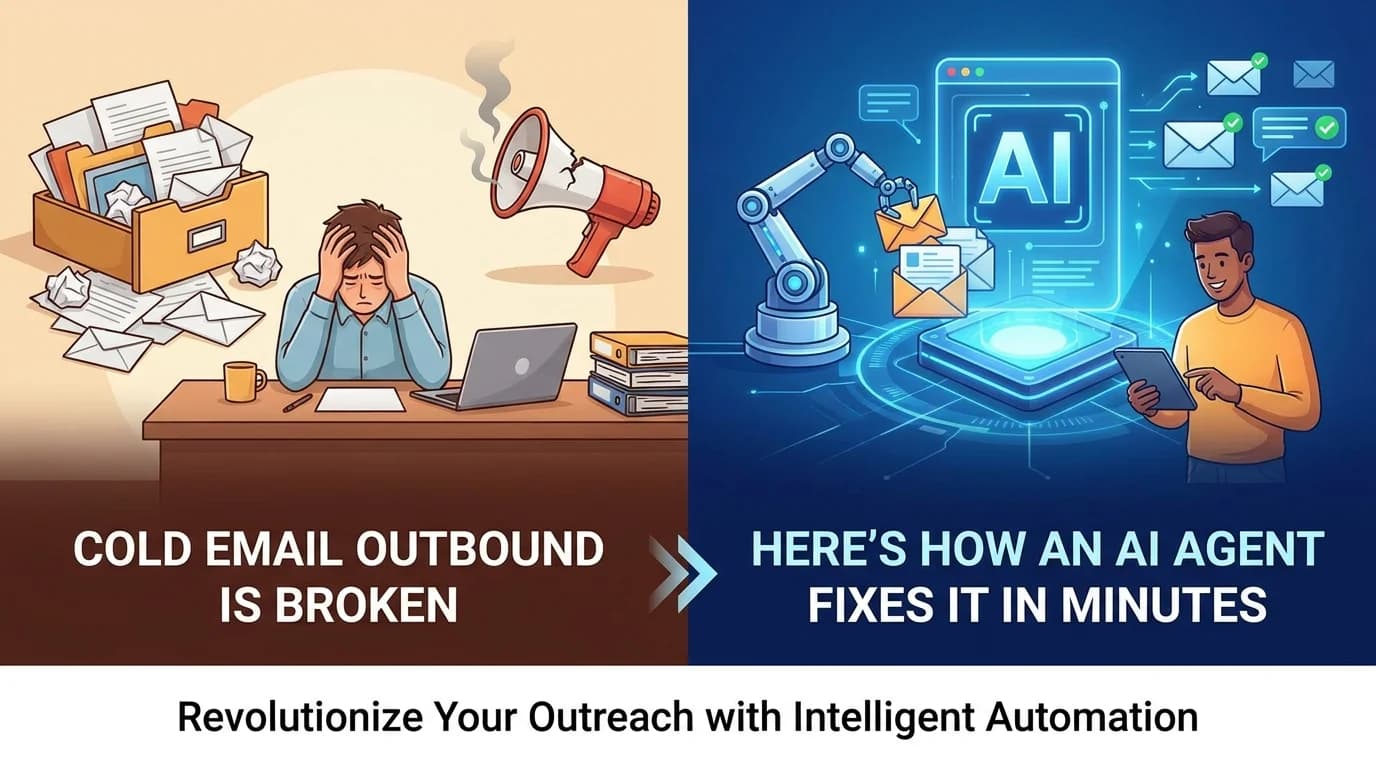
AI GTM Outreach: How Modern Teams Personalize Sales at Scale Without Hiring More SDRs
Learn how AI GTM outreach is changing outbound sales by automating prospect research, personalized email creation, and campaign execution. Discover best practices, common pitfalls, and how AI agents can dramatically increase outbound efficiency.
The Complete SEO Audit Guide for 2026: How to Find and Fix Website SEO Issues Faster with AI
Learn how to conduct a comprehensive SEO audit in 2026 using AI tools to identify and fix website SEO issues efficiently.
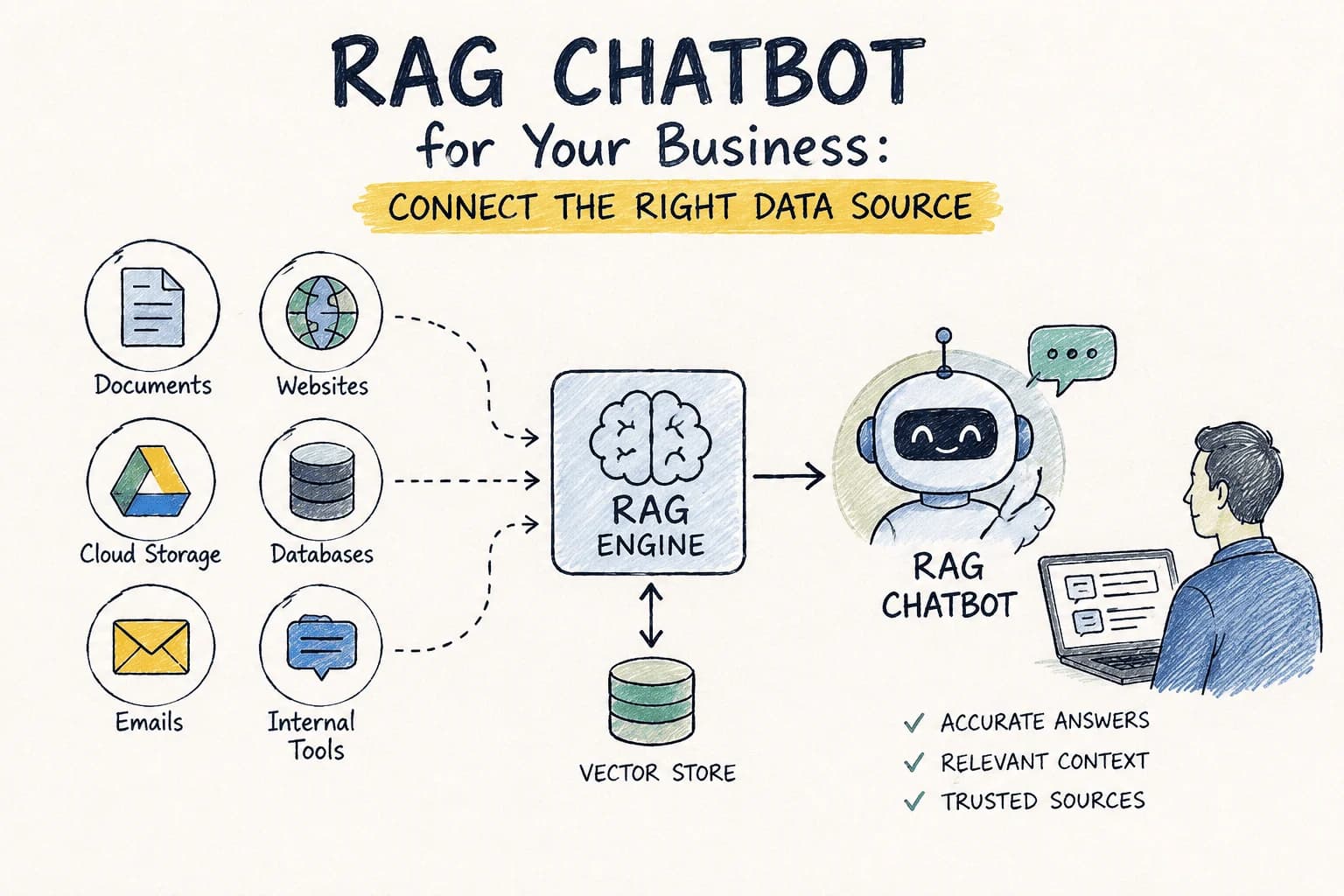
RAG Chatbot for Your Business: Which Data Source Should You Connect First?
Choosing the right data source for your RAG chatbot can be challenging. This guide compares options to help you decide which to connect first.
Stay ahead in AI
Get updates on agents, MCP, and production AI workflows.
Comments coming soon.